Physics and AI for undruggable diseases
Turning the most complex cancer drivers — biomolecular condensates — into precision drug targets that conventional and IDR-focused tools can’t reach
About
We are pioneering a new era in cancer drug discovery — going beyond proteins and IDRs to drug entire biomolecular condensates, the most elusive cancer drivers.
Our proprietary physics- and AI-powered platform is creating the first foundational model for condensate drugging, enabling precision therapies where conventional drug discovery falls short.
Science
The rules change when proteins assemble — and so must drug discovery
A single bee can sting — but a whole hive can build, defend, and thrive in ways no lone bee ever could.
Biomolecular condensates are like hives: when proteins assemble into condensates, they gain new, emergent properties — coordination, curated compositions, and drug response — that single proteins simply don’t have.
Because conventional drug discovery is built to target single proteins or isolated IDRs, it simply can’t reach condensates — leaving some of cancer’s most elusive drivers untouchable.
Biomolecular Condensates
The Elusive Drivers of Cancer
In many cancers, biomolecular condensates act as master control hubs — running the programs that let tumors grow and evade treatment. Their emergent properties make them powerful, but impossible to hit with conventional single-protein drug discovery.
Science
Grounded in physics. Powered by AI. Built to beat cancer’s most elusive drivers
At PhAsIca, we are pioneering the first foundational model for condensate drug discovery — integrating physics, bioinformatics, and AI into a predictive engine that turns condensates into druggable targets. Our platform transforms how the industry tackles cancer’s most elusive drivers, opening a therapeutic space conventional tools can’t reach.
Unlike approaches that focus only on intrinsically disordered regions (IDRs), we capture the full diversity of condensate biology — proteins with ordered and disordered domains, plus RNA, DNA and chromatin. By modeling complete condensates, we uncover emergent rules that govern their role in cancer — rules that single-protein or IDR-only strategies can’t access.
1) See the Whole Target in Detail
We capture the full complexity of biomolecular condensates —ordered proteins, IDRs, RNA, DNA, chromatin — and their drug interactions at atomistic resolution, revealing hidden vulnerabilities.
2) Design with Physics-grounded AI
Our platform unites state-of-the-art physics-based multiscale simulations with AI-driven design to create drugs (small molecules and peptides) that disrupt whole condensates, not just fragments.
3) Validate with Precision
We rapidly test predictions in the lab, using functional readouts to measure condensate disruption and feed results back into the design loop — accelerating the path from concept to clinic.
Technology
Defining the Future of Condensate Drug Discovery
We don’t chase single proteins — we decode the full physicochemical environment of biomolecular condensates, where proteins, RNA, DNA, and chromatin unite into dynamic molecular engines driving cancer’s most elusive pathways.
While others stop at intrinsically disordered regions, we uncover and exploit emergent vulnerabilities of entire condensates with chemical precision
Our grounded-in-physics, powered-by-AI approach opens a vast untapped therapeutic space in oncology — a frontier conventional and IDR-only strategies can’t reach. We’re not just identifying a new target class; we’re defining a new category of drug discovery.
By transforming condensates into precision drug targets, we’re unlocking a therapeutic frontier that has remained out of reach — until now.
Technology
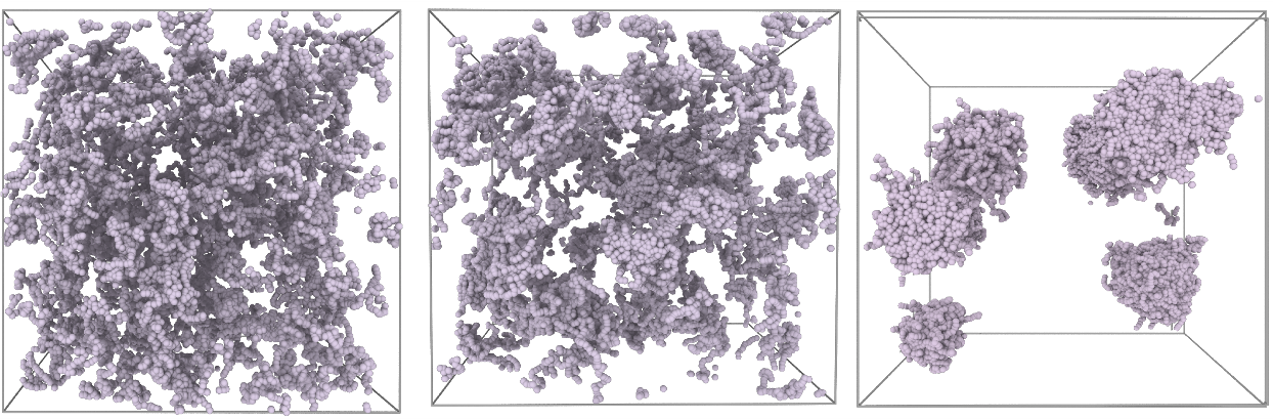
PhAsIca is pioneering condensate-targeting drug discovery beyond the limits of today’s tools for next-generation precision oncology
Target discovery and identification
Discovery of condensate-drug interactions to unlock powerful new synthetic lethality
Technology
The PhAsIca Platform: Redefining What’s Druggable in Cancer
Find the Right Condensates
AI + omics to pinpoint high-value targets
We identify condensate-prone assemblies across cancers and stratify patients most likely to respond — combining omics data with machine learning to prioritize the biggest therapeutic wins.
Decode the Physicochemical Blueprint
From fundamental forces to emergent vulnerabilities
Our state-of-the-art physics-driven multiscale simulations map the full physicochemical environment of condensates — made of ordered proteins, IDRs, RNA, DNA and chromatin — revealing the specific keys to drug each condensate that single-protein or IDR-only technologies miss.
Rationally Design to Transform Condensates
Optimising small molecules and peptides for condensate modulation
We unite physics-driven simulations with AI-driven design to develop compounds that can specifically tune the stability, composition, material properties, and dynamics of condensates — converting untouchable cancer drivers into precision targets.
Test and Refine
Lab feedback accelerates design
High-content assays and functional readouts confirm desired condensate changes in cells. Results feed straight back into our simulation–AI loop, accelerating the path from concept to clinic.
Partners


Contact us
investors@phasicatherapeutics.com